
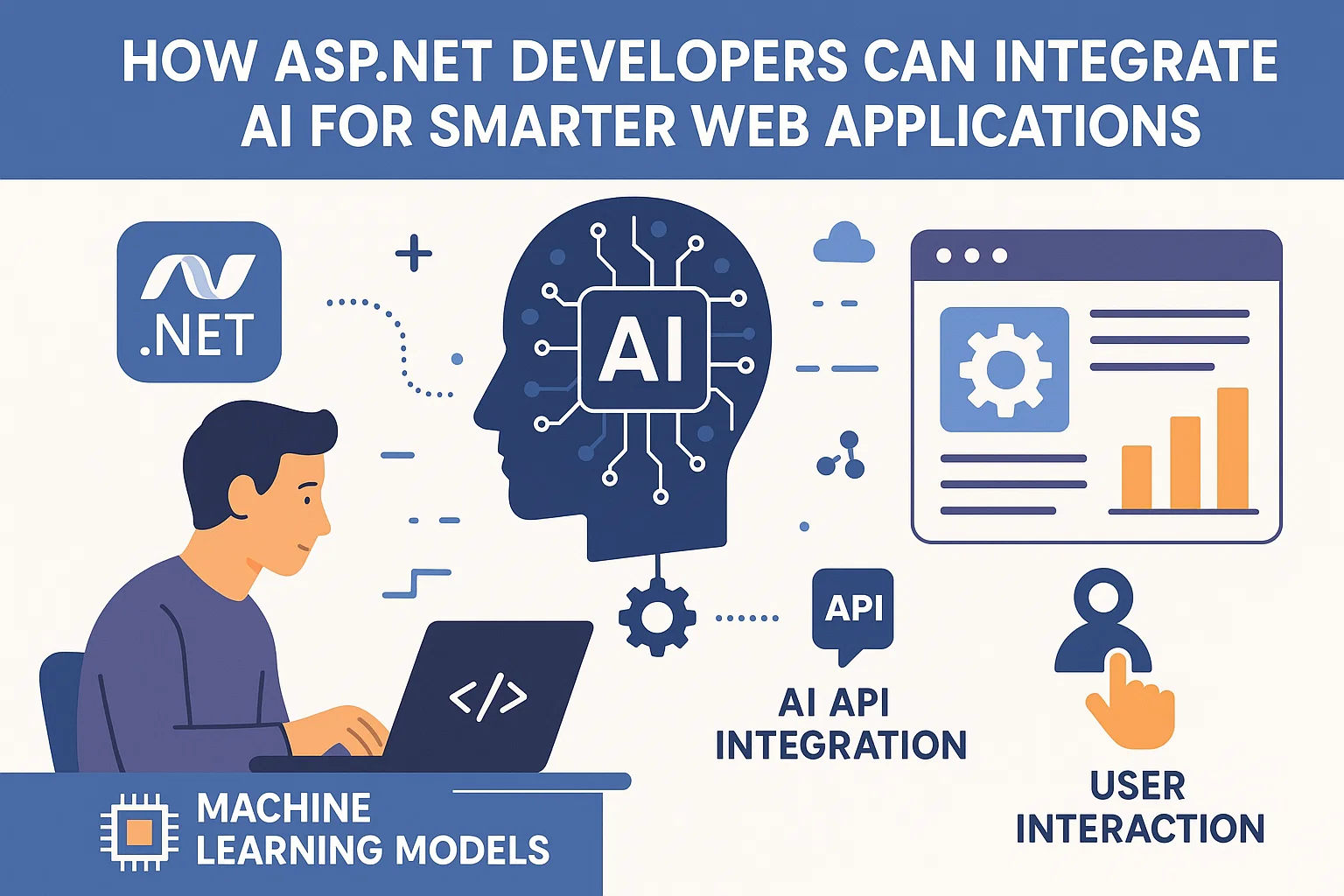
Artificial Intelligence (AI) is no longer a futuristic concept—it’s a present-day necessity. Businesses across industries are adopting AI to make their web applications more interactive, personalized, and intelligent. For developers working with ASP.NET, integrating AI into projects can unlock a new level of user engagement and efficiency. From chatbots to recommendation engines, ASP.NET developers now have access to powerful tools and frameworks that make AI integration easier than ever.
In this blog, we’ll explore practical ways to add AI features to your ASP.NET projects, focusing on chatbots, personalization, and recommendations. We’ll also cover why these integrations matter and how they transform simple web apps into intelligent ASP.NET applications.
Why AI in ASP.NET Apps Matters
AI enhances web applications by making them more responsive, adaptive, and user-centric. Here are a few reasons developers are increasingly focusing on ASP.NET AI integration:
- Improved User Experience: AI-driven interfaces understand user behaviour and adapt accordingly.
- Automation: Tasks like customer queries, data entry, and recommendations can be automated.
- Personalization: AI ensures users get content tailored to their needs.
- Business Value: Smarter apps mean higher engagement, better retention, and improved ROI.
Practical Ways to Integrate AI in ASP.NET Projects
1. Building AI-Powered Chatbots
One of the most popular applications of AI in web development is conversational interfaces. With AI-powered chatbots, businesses can provide 24/7 support without relying solely on human staff.
- Implementation in ASP.NET: Developers can integrate chatbots using Microsoft Bot Framework or third-party APIs like Dialogflow. These tools can be embedded directly into ASP.NET apps to handle customer service, lead generation, and FAQs.
- Business Use Case: An e-commerce website can implement a chatbot to assist users in tracking orders, suggesting products, or resolving common issues instantly.
2. Personalizing User Experience
Personalization is at the heart of modern web applications. Instead of delivering the same static experience to every visitor, AI allows websites to adapt dynamically.
- Implementation in ASP.NET: Machine Learning models can be integrated via ML.NET or Azure Cognitive Services. They can analyze browsing behavior, past interactions, and purchase history to tailor content, product listings, or service recommendations.
- Business Use Case: A news portal can recommend articles based on a reader’s past preferences, ensuring higher engagement.
3. Recommendation Engines
AI-powered recommendation engines are widely used by companies like Netflix, Amazon, and Spotify. With ASP.NET, developers can implement similar features for their own applications.
- Implementation in ASP.NET: Using ML.NET, developers can build recommendation models and integrate them with ASP.NET applications. The engine can suggest products, services, or content that matches user interests.
- Business Use Case: A learning platform can recommend courses to users based on their previous enrollments and skill levels.
4. Sentiment Analysis and Customer Insights
Understanding customer emotions through AI can greatly enhance engagement strategies. Sentiment analysis helps businesses adapt their communication based on user mood and feedback.
- Implementation in ASP.NET: By leveraging Azure Text Analytics API or integrating ML models, developers can analyze customer reviews, comments, or support tickets in real time.
- Business Use Case: A travel booking platform can track customer sentiment in reviews and highlight positive experiences on its website.
5. Image and Speech Recognition
For modern applications, multimedia interactions are just as important as text-based ones. AI makes it possible to recognize images, voices, and gestures within web apps.
- Implementation in ASP.NET: Azure Cognitive Services offers APIs for vision, speech, and language understanding that can be integrated directly into ASP.NET apps.
- Business Use Case: A healthcare platform can allow patients to upload medical scans and use AI to highlight potential areas of concern for doctors.
Best Practices for ASP.NET AI Integration
To build robust intelligent ASP.NET applications, developers should follow these best practices:
- Start Small: Begin with one AI feature (like chatbots) before expanding.
- Leverage Cloud Services: Use Azure AI and Cognitive Services to save time on building models from scratch.
- Ensure Data Security: AI relies on user data—secure it with encryption and proper compliance.
- Focus on UX: AI features should enhance the user experience, not complicate it.
- Test and Iterate: Continuously refine AI models to keep them accurate and relevant.
The Future of AI in ASP.NET
The integration of AI into ASP.NET apps is just the beginning. As tools like ML.NET evolve and cloud-based AI services expand, developers will have even more opportunities to embed intelligence into their applications. From predictive analytics to advanced natural language processing, the next wave of web applications will be smarter, faster, and more user-focused.
For businesses, this means investing in AI is no longer optional—it’s a competitive advantage. And for ASP.NET developers, mastering AI integration is becoming an essential skill.
Conclusion
Artificial Intelligence is transforming the way web applications are built and experienced. For developers, adding AI features like chatbots, personalization, and recommendation engines to ASP.NET apps creates smarter, more engaging platforms. With the right tools—ML.NET, Azure Cognitive Services, and pre-trained AI models—integrating AI is now both practical and accessible.
If you’re looking to implement these capabilities in your projects, our ASP.NET AI integration expertise can help you design and develop intelligent solutions tailored to your business needs.